Auditory obstruction can be unsettling, often making you feel separated from the community around you. Many people immediately fear they’re experiencing permanent hearing loss when, in reality, the culprit may be something much more basic: cerumen accumulation.
Knowing how to tell these two conditions apart guarantees you seek the appropriate care, whether that is safe wax removal or a clinical hearing test. Avoid the urge to worry if your hearing feels abruptly diminished. While only a clinician can confirm the cause, understanding these key indicators of wax vs. auditory decline can provide instant clarity.
Recognizing Cerumen Blockage Symptoms
Earwax is actually a beneficial, natural secretion designed to protect the ear canal from particles and external debris. The difficulty starts when this material accumulates to the level of a tangible obstruction.
Symptoms of a blockage often include:
- Progressive or sudden muffled hearing
- A feeling of ear pressure or a “plugged” sense
- Overall ear discomfort or mild soreness
- Persistent buzzing or hissing sounds
- Hearing that improves briefly after yawning or chewing
Because obstructions are tangible, they commonly impact just one ear at a time rather than both equally. Luckily, once surplus wax is safely extracted, hearing often returns to baseline right away.
Recognizing the Signs of Irreversible Auditory Decline
Unlike a brief blockage, sensorineural hearing impairment usually progresses slowly over years and is not fixed by cleaning the canal.
Signs of true auditory impairment may feature:
- Battling to track conversations when background noise is audible
- Regularly requiring repetition during normal dialogue
- Turning up the TV or smartphone audio higher than others prefer
- Diminished responsiveness to high-frequency sound input
- Bilateral hearing changes that impact both ear canals at once
A vital difference is that actual loss lacks the tangible “plugged” feeling that follows a cerumen impaction.
Comparing Cerumen Blockage and Hearing Loss
By analyzing the timing and specific symptoms, you can frequently identify which issue is affecting you:
- Progression: Blockages can feel sudden, while hearing loss is virtually always gradual
- Longevity: Wax issues are fixable and temporary, whereas loss is usually chronic
- Sensations: Physical “plugging” points to wax, while the struggle to differentiate sounds points to impairment
- Asymmetry: Wax often impacts a single ear; auditory impairment frequently affects both
Reasons Not to Treat Yourself
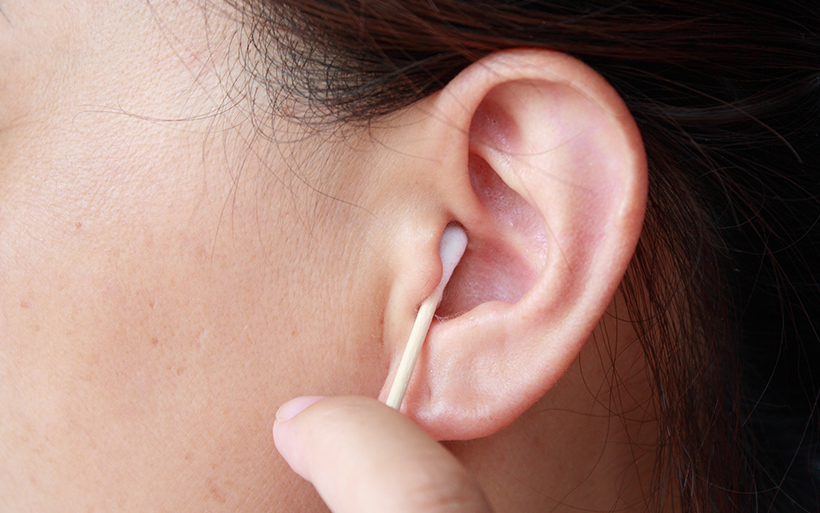
Many people make the error of trying to clear a suspected blockage manually using swabs or household tools. In reality, physical poking often compacts the wax further against the eardrum, making the situation worse.
Medical experts caution that putting anything smaller than your finger in your ear can result in tympanic damage and severe clogging.
On the flip side, assuming a problem is just wax when it is actually hearing loss can hinder you from obtaining the assistance you require to remain connected.
What to Expect Throughout a Professional Consultation
A quick professional exam is the primary way to verify if cerumen is actually the source of your muffled hearing.
If an obstruction is identified, a clinician can remove it carefully, often returning your auditory function instantly.
Should the auditory canal be unobstructed but hearing struggles persist, an audiogram can assess whether auditory impairment is present and identify its category and degree.
Experts urge an immediate auditory screening if you begin struggling to communicate or navigate your environment.
Is It Earwax Blockage or Hearing Loss?
Dampened auditory quality is not a definitive marker of chronic loss.
In numerous cases, cerumen accumulation is the source, and it’s highly treatable.
A professional evaluation will give you the clarity you require to advance without worry.
Keep in mind that home assessment is hardly a replacement for a clinical exam when it comes to your hearing.
Finding answers promptly can prevent pointless worry and ensure you receive the appropriate care at the optimal moment.
If you’ve noticed a shift in your hearing, reach out to our office for a professional assessment immediately.