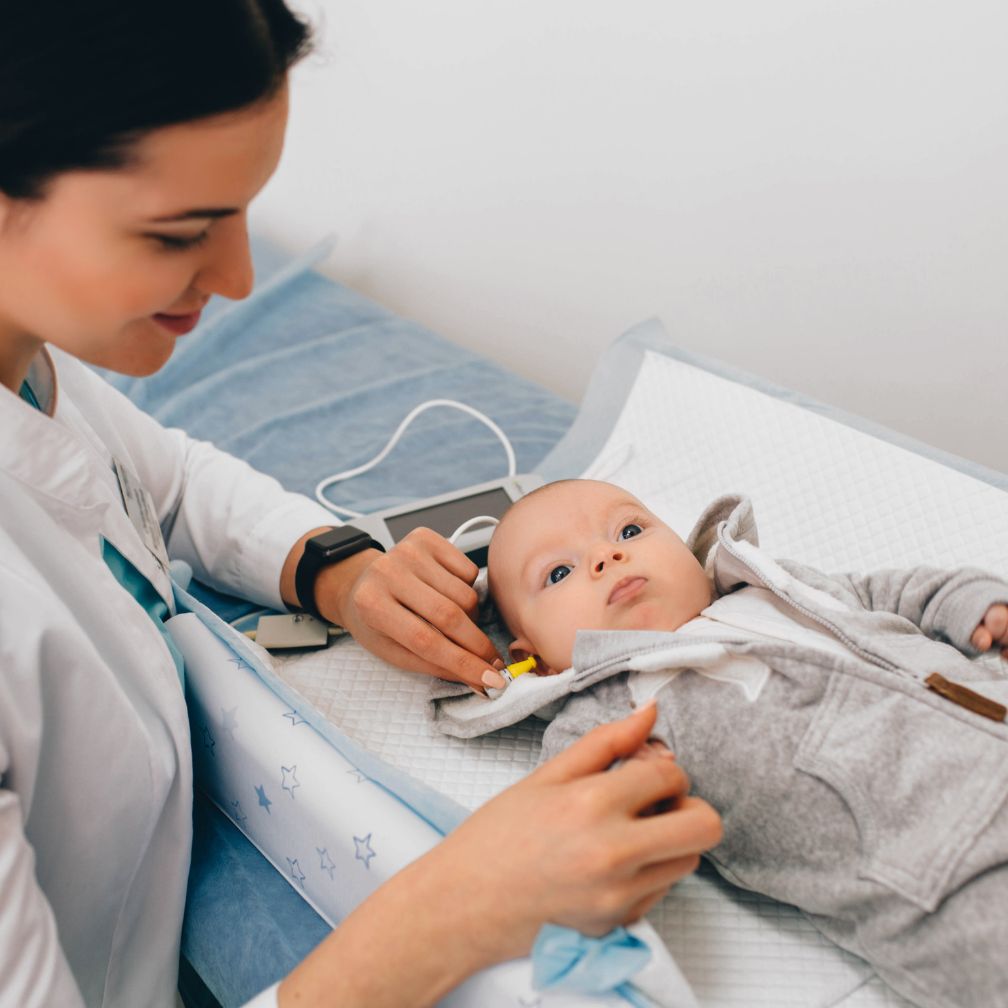
For recent parents, discovering that their infant experiences auditory deficits can feel deeply shocking and distressing. Fortunately, the encouraging truth is that via early testing and professional support, young patients with hearing challenges are able to thrive exceptionally. Beyond doubt, these children can build clear speech, social competencies, and enduring bonds within their community, realizing a wonderful life!
Combining external hearing aids with targeted cochlear implantation offers two exceptionally successful approaches for assisting infants with hearing loss. In this section, our guide analyzes their operational details so you can identify the correct choice for your baby.
Understanding Infant Hearing Loss
Congenital hearing impairment in infants often occurs because of diverse root causes, such as:
- Inherited genetic traits (even when family histories show no precedent)
- Targeted in-utero viral infections including cytomegalovirus (CMV) and rubella cases
- Acute complications during birth, incorporating lack of oxygen or prematurity
- Selected pharmaceutical treatments administered within hospital neonatal units
What serves as the chief goal for families? Prompt medical diagnosis. Due to these facts, newborns across the United States undergo mandatory hearing screening preceding their departure from the facility. Leading pediatric hearing professionals implement the official “1-3-6” target timetable:
- Primary screening completed within 30 days of birth
- Complete clinical diagnosis confirmed within 90 days of birth
- Therapeutic intervention (employing wearable technology or developmental therapy) commenced within 180 days of birth
Satisfying these procedural steps offers infants an optimal opportunity for healthy speech, language mastery, and brain development. If you need guidance regarding these auditory screens, your family pediatrician will gladly offer support!
Understanding Amplification Devices for Infants
For infants diagnosed with mild to severe auditory loss, electronic hearing aids typically represent the preferred starting point. These small, wearable devices elevate acoustic volume, helping babies hear speech and environmental sounds more clearly.
Dedicated pediatric-grade hearing devices represent:
- Exceptionally safe for use on newborns aged just a few weeks
- Crafted featuring soft, skin-friendly ear inserts that adapt during early physical development
- Outfitted with secure battery housing closures and custom pediatric safety options
- Custom-calibrated by a pediatric audiology specialist to target your child’s distinct hearing prescription
While your infant develops, hearing devices require routine recalibration to maintain ideal ear-canal fit and acoustic output.
Cochlear Implant Options for Newborns
If a baby exhibits severe to profound sensorineural loss and receives minimal help from conventional hearing aids, a cochlear device can be prescribed. Differing from external acoustic hearing aids, modern cochlear implants:
- Must be surgically installed during a specialized medical procedure
- Fully bypass non-working sections within the cochlear system
- Convert surrounding audio into precise electrical signals that excite the acoustic nerve pathways directly
Advanced cochlear implant devices serve as:
- Clinically cleared by the FDA for babies aged 9 to 12 months
- Extremely effective when integrated with early speech therapy and strong parental involvement
- Recommended exclusively following a complete diagnostic battery performed by an audiologist alongside an ENT physician
Such a comprehensive process requires temporal bone imaging, comprehensive audiometric testing, and detailed consultations regarding anticipated long-term progress.
Hearing Aids vs. Cochlear Implants: What’s the Difference?
- Mild to severe hearing challenges suit Hearing Aids; Severe to profound hearing impairment calls for Cochlear Implants
- Non-Invasive wearable design: Hearing Aids; Invasive surgical placement: Cochlear Implants
- Physical sound amplification: Hearing Aids; Digital electrical impulse transformation: Cochlear Implants
- Starts at Infancy: Hearing Aids; Starts at 9-12 Months: Cochlear Implants
Closing Perspective: Choosing Between Hearing Aids and Implants
Should your baby receive a formal hearing loss diagnosis, rest assured that clear options alongside extensive professional backing. Under the care of specialized pediatric hearing doctors, countless infants successfully cultivate speech and language milestones fully matching their playmates.
Whether your youngster qualifies for external hearing aids or surgical cochlear implants, early management can make a lifelong difference.
Do you still have lingering questions regarding your infant’s auditory condition? Contact our staff today to arrange a comprehensive evaluation and customized treatment program.