For individuals who deal with tinnitus, air travel can be a source of anxiety, as the flight may exacerbate their ear discomfort, adding to the usual pre-trip jitters about reaching their final destination. The loud cabin noise, changing air pressure, and stress associated with air travel can all contribute to more intense or irritating tinnitus. By perceiving the effect of air travel on your ears and taking practical steps, you can dramatically reduce discomfort and make your upcoming flight a lot more pleasant.
What is tinnitus and why does it flare up in the air?
Tinnitus is the perception of sound without any external source. Some people experience a continuous ringing sound, while others hear buzzing, clicking, whooshing, or static noises.
While tinnitus on its own isn’t a disease, it’s frequently a symptom of an underlying health concerns including:
- Hearing Loss: Traumatic head injuries or extended exposure to excessive noise levels can harm the delicate structures of the inner ear.
- Ear Infections or Obstructions: Fluid accumulation and infections can activate or worsen tinnitus.
- Ototoxic Medicines: A number of medications can harm the inner ear, leading to or intensifying symptoms.
- Benign Tumors: Acoustic neuromas are benign tumors that can impact both hearing and balance.
Tinnitus may be subjective (experienced only by the patient) or objective (audible to a specialist through a stethoscope-like device). When flying, a number of variables can worsen the symptoms, making travel more unpleasant for those impacted.
Comprehending airplane ear and its link to tinnitus
The term “airplane ear” refers to the feeling of ears being full, under pressure, or experiencing muted hearing while flying. It happens when the eustachian tubes– which regulate pressure in the middle ear– working to adjust to altitude changes during ascent or descent. If these tubes fail to open efficiently, pressure imbalances can develop, leading to discomfort or even pain.
For individuals with tinnitus, this pressure imbalance can intensify their symptoms or introduce new ones. The added stress and sensory overload of a flight only compound the issue.
Why flying can aggravate tinnitus symptoms
A number of elements of air travel might worsen tinnitus:
- Jet Engine Noise: High volume levels inside the cabin, particularly near the engines, can intensify sensitivity in the ears and worsen tinnitus.
- Pressure Changes: During takeoff and landing, the rapid shifts in cabin pressure can impact how the eardrum and surrounding structures vibrate, which might activate or heighten tinnitus.
- Travel-related anxiety, combined with inadequate rest or insufficient hydration, can intensify the experience of tinnitus, making it seem more pronounced and troublesome.
Travel suggestions for decreasing tinnitus discomfort mid-flight
Taking a few simple actions can go a long way toward easing the strain on your ears during air travel:
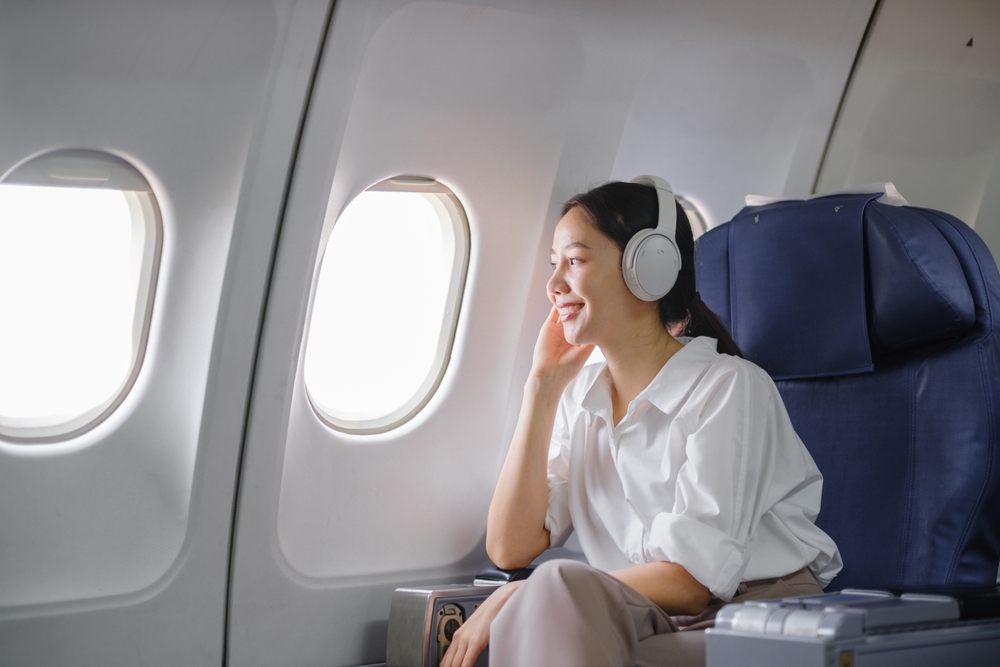
- Using noise-canceling headphones can greatly minimize the disruptive sounds of the plane’s engine, particularly during the noisy periods of departure and arrival. They also allow you to listen to soothing music or white noise, which can mask tinnitus.
- Choose Your Seat Wisely: If available, pick a seat in the front of the aircraft, further from the engines. This location is generally calmer and better suited for a relaxing journey.
- Stay Clear Of Basic Earplugs: Though tempting, traditional earplugs may increase inner ear pressure, making symptoms more severe. Alternatively, think about using plugs that are produced for regulating ear pressure during air travel.
- Chew Gum: To alleviate discomfort, try chewing gum or swallowing regularly, as these simple actions can help maintain the patency of the eustachian tubes, facilitating a more efficient balance of pressure.
- Use a Decongestant: Consider using a decongestant, either in oral or nasal form, before your flight if your doctor advises it. This can help alleviate nasal congestion and allergies, potentially avoiding any blockages in the eustachian tubes.
- Stay Awake during Takeoff and Landing: Being awake helps your body naturally manage pressure. Sleeping during these moments can decrease the probability of active pressure adjustement.
Techniques for remaining relaxed and entertained during a flight
Refocusing one’s attention can be a highly effective approach for dealing with tinnitus. Consider diverting your attention with engaging distractions including audiobooks, calming music, or brain teasers to shift your focus away. Practicing meditation using apps and engaging in breathing exercises can reduce anxiety associated with flying and reduce your awareness of tinnitus.
Prior to your trip, be sure to rest well and stay hydrated. Skipping caffeine or alcohol on travel day can also decrease ear-related symptoms. And if you use hearing aids, don’t hesitate to use them on the plane– they may help you hear more naturally, decreasing the prominence of the internal ringing or buzzing.
Get professional guidance if tinnitus disrupts travel
If tinnitus routinely makes flying unpleasant, it’s worth speaking with a hearing specialist. A detailed evaluation can pinpoint the underlying reason for your tinnitus and bring about specific suggestions, such as personalized coping strategies or treatment plans, to better manage instances of increased symptoms.
Set up an evaluation for your tinnitus symptoms today.